- Qcells is expanding from supplying Microsoft with solar panels and engineering, procurement, and construction (EPC) services to collaborating to provide energy capacity to the grid surrounding data centers, enabling data center growth.
- Qcells is also exploring building virtual power plants (VPPs) for Microsoft that aggregate residential and commercial batteries, including in income-qualified households, easing peak demand for utilities while lowering family energy bills.
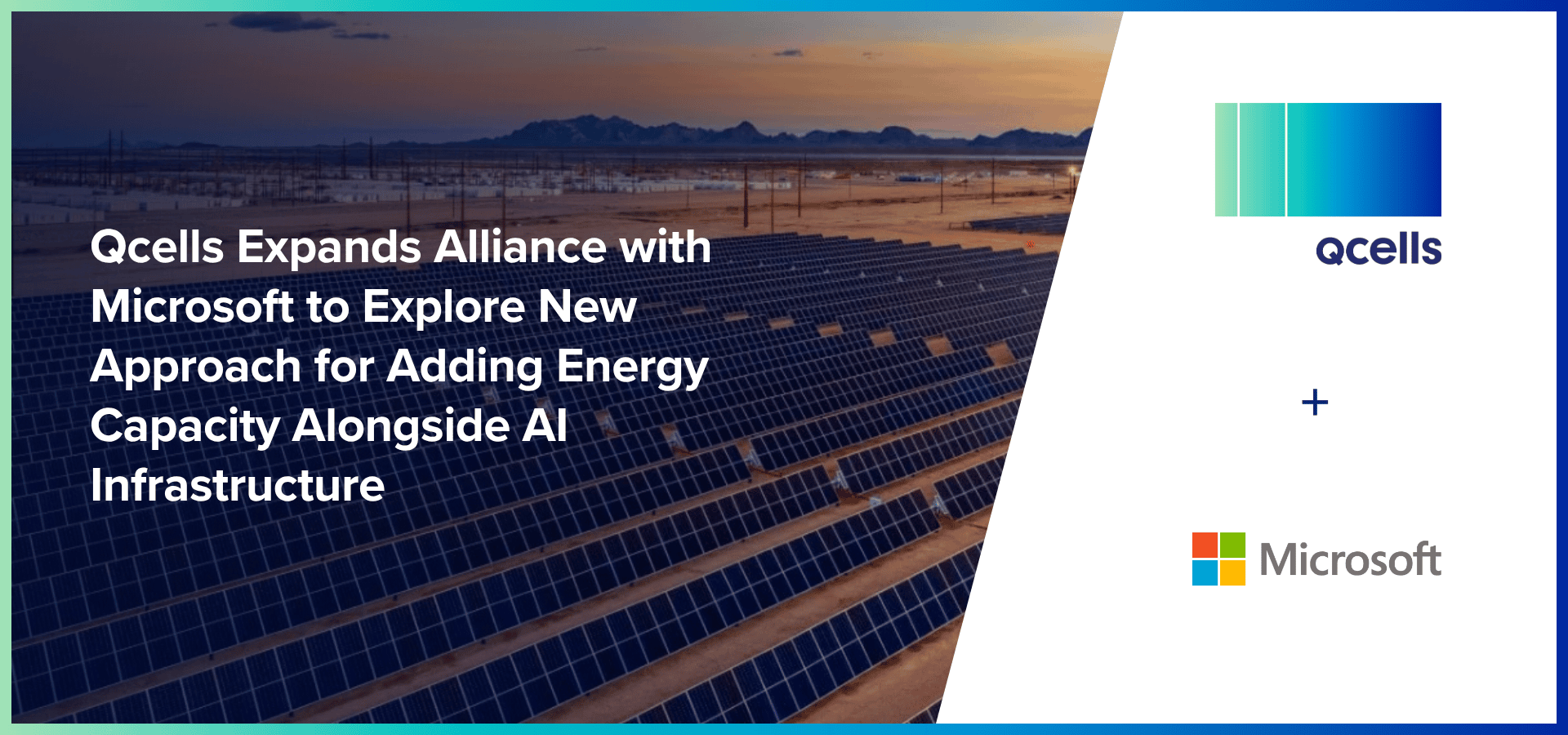
IRVINE, CA – August 19, 2026 – Artificial intelligence is creating a new challenge for the electric grid: how to add computing capacity without shifting costs onto the communities that host it. Today, Qcells announced they are expanding their existing relationship with Microsoft to explore ways to pair AI infrastructure with new energy capacity. Rather than simply adding electricity demand to the grid, the proposed approach would develop new generation and flexible energy resources alongside Microsoft’s expanding data center footprint, helping support grid reliability while enabling future AI growth. The collaboration supports Microsoft’s Community-First AI Infrastructure initiative and Qcells’ growing role in developing the energy infrastructure that enables AI.
Under a proposed “bring-your-own-capacity” (BYOC) model, Qcells would develop and build new energy capacity that could be delivered either directly to Microsoft or to the local utility serving the surrounding community. Microsoft would fund the power required for its operations, helping ensure that new data center demand is matched with new energy resources. Qcells would bring its expertise across energy development, engineering, procurement, construction, and grid orchestration to help turn Microsoft’s interest into new energy infrastructure.
The companies are also exploring Virtual Power Plants (VPPs) that combine thousands of residential and commercial batteries into a single flexible energy resource. During periods of peak demand, those batteries can provide electricity to the grid when utilities need it most. Outside of those events, participating customers would use their batteries normally while benefiting from lower electricity bills and compensation for supporting grid operations.
Qcells plans to prioritize participation from income-qualified households, helping ensure the economic benefits of AI infrastructure extend into the communities where it is built. Microsoft Fabric and Azure are the unifying data layers that enable secure coordination of these distributed energy resources (DERs) at scale.
“As AI transforms the economy, we have an opportunity to rethink how the energy infrastructure supporting it is built,” said Andy Park, Global CEO of Qcells. “Our relationship with Microsoft began with American-made solar manufacturing and construction. Now we’re exploring how we can build the energy capacity needed for AI while creating lasting value for the communities that share the grid.”
Qcells began working with Microsoft in 2023 through an agreement for 2.5 gigawatts of American-made solar modules and engineering, procurement, and construction (EPC) services. In 2024, the companies expanded that alliance to 12 gigawatts, creating the largest solar supply and EPC agreement of its kind. This new collaboration represents the next phase of that relationship as the companies explore new approaches to supporting America’s growing AI infrastructure.
###
About Qcells
Qcells is a leading clean energy company delivering end-to-end solutions—from advanced solar cell and panel manufacturing to intelligent energy storage systems and large-scale EPC services. As the largest silicon-based solar manufacturer in the United States, Qcells is expanding American production capacity and strengthening domestic supply chains to support the growing demand for reliable, scalable energy solutions across the utility, commercial, governmental, and residential markets. Qcells operates a global manufacturing network spanning the United States, Malaysia, and South Korea, with a growing footprint in America that supports domestic energy deployment and job creation. The company’s Complete Energy Solutions combine high-performance solar technology, advanced energy storage, proprietary energy management software and flexible financing options—helping customers plan, build and operate projects efficiently and at scale. Qcells also advances long-term sustainability and system performance through solar recycling operations and next-generation cell technology R&D. With an expanding international presence across four continents, Qcells is committed to delivering high-quality products, dependable execution and long-term partnerships worldwide.
For more information, visit: https://qcells.com/us.
Media Contact
Marta Stoepker, Head of Communications
Qcells North America
us-media@qcells.com